
News

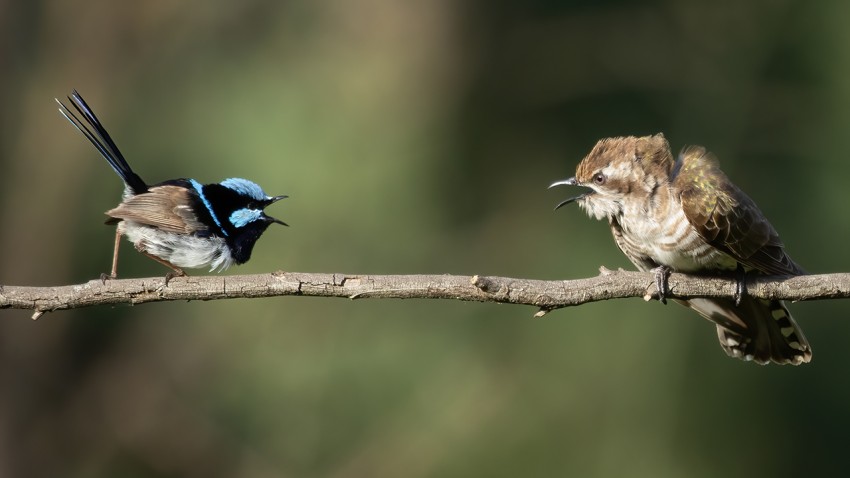
New research sheds light on the evolution of language, discovering a link between innate and learned vocalizations.
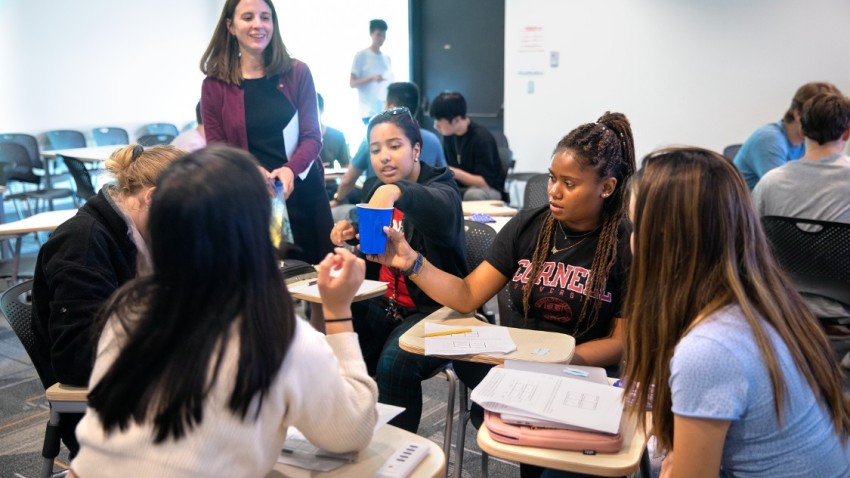
The team found a significant uptick in the number of articles published after 2013 that focused on core concepts and competencies suggested in a seminal report.

The Weill Institute for Cell and Molecular Biology will bring together leading scientists from across the globe and across disciplines for its 8th Biennial Weill Institute Symposium, Oct. 13–14. The two-day program, taking place in Ithaca, NY., will showcase advances in molecular and cell biology research, while fostering opportunities for Cornell students and postdoctoral scholars to connect with internationally recognized leaders in the life sciences.
Researchers in the Virtual Embodiment Lab found that engagement in social virtual reality, whether with loved ones or total strangers, enhances pain tolerance.
Cornell University has been awarded a portion of a $2 million planning initiative from the U.S. National Science Foundation to establish AI4Ag, a national testbed for artificial intelligence in agriculture.

A new study in fruit flies describes how an animal’s gut reacts differently to beneficial microbes versus harmful pathogens.
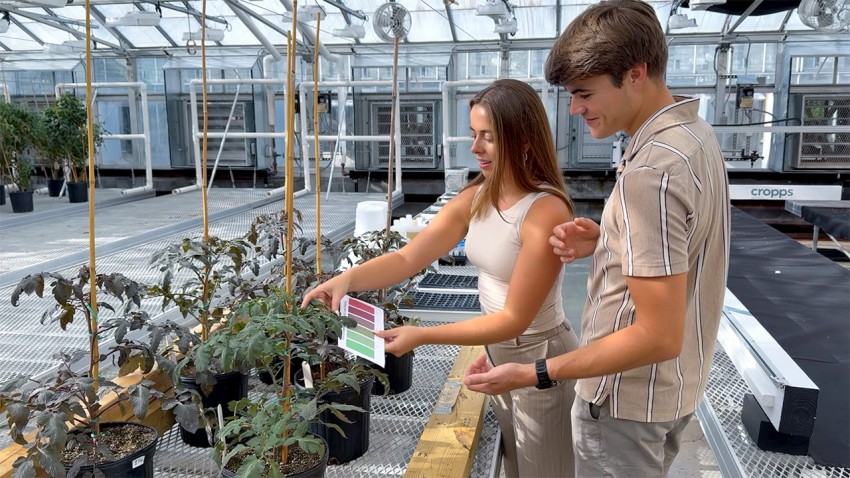
An invention developed by two graduate students turns engineered tomato plants red when soil nitrogen levels are low.

Changes in the genomes of the Turkana of northern Kenya reveal how they have evolved to survive in extreme desert conditions for thousands of years.